01
Tianyuan difang 天圆地方 (The sky is round, the earth is square)
02
Chinese Geography
03
Geography of Memory
04
Materials and Results
01

Tianyuan difang 天圆地方 (The sky is round, the earth is square)

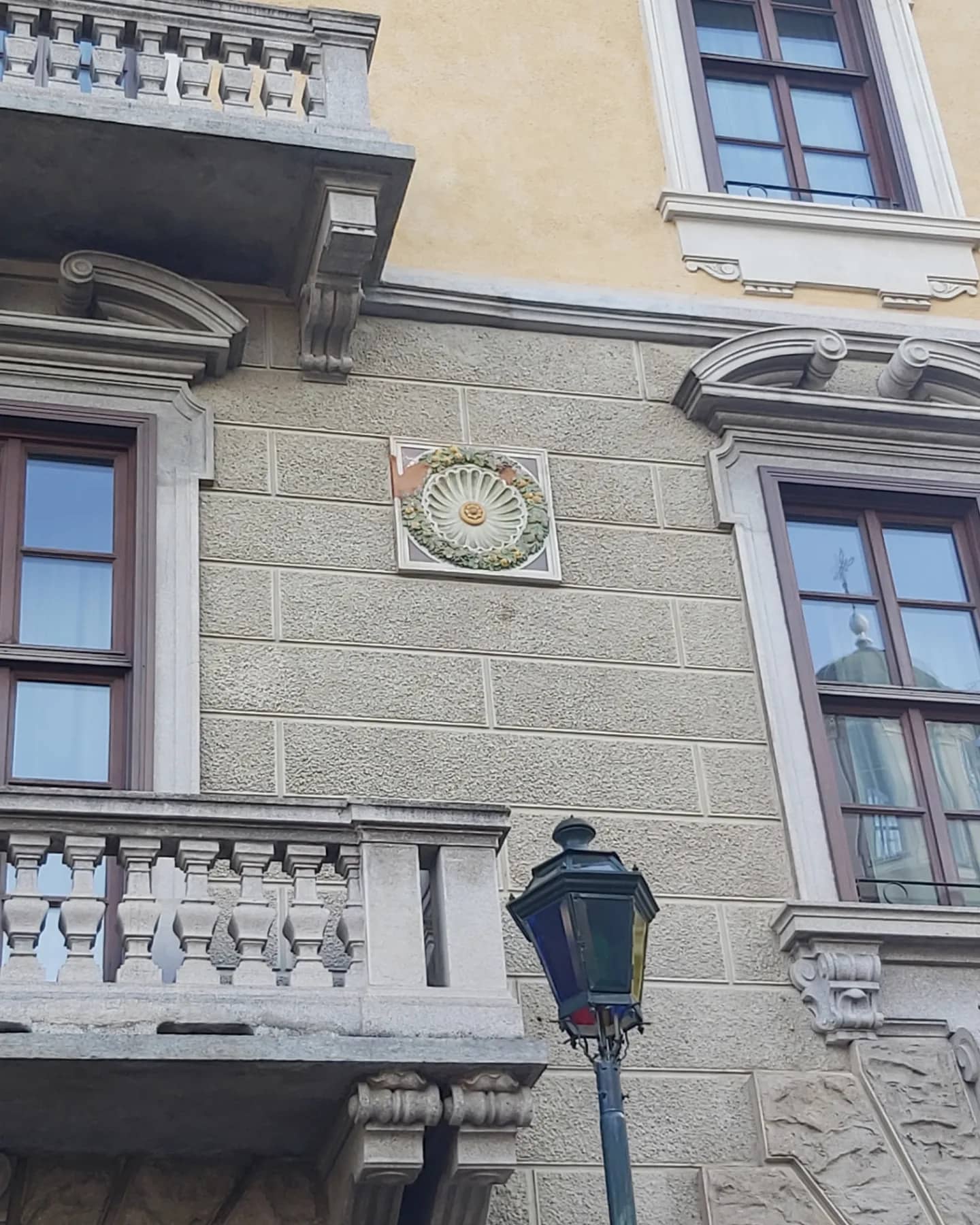
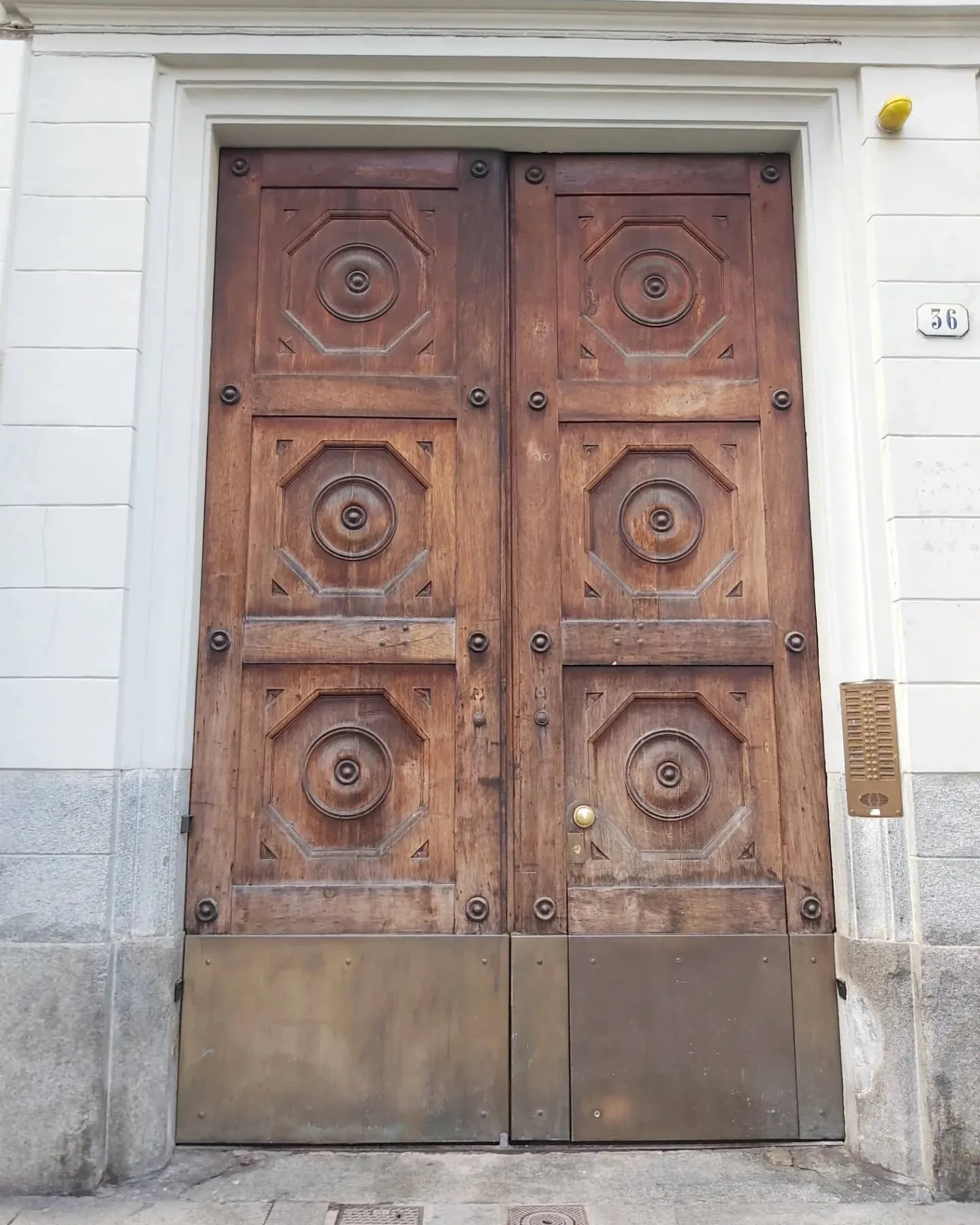
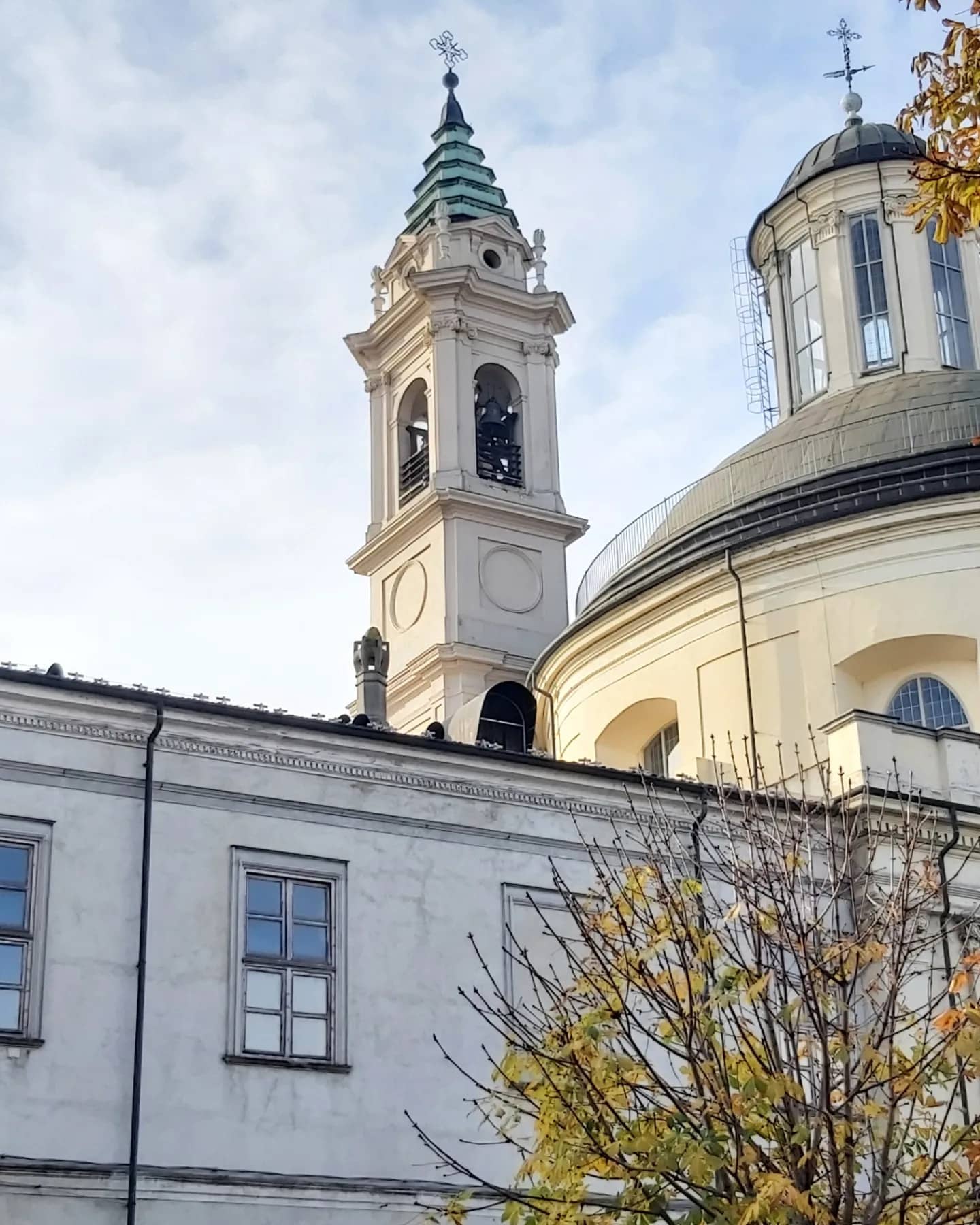
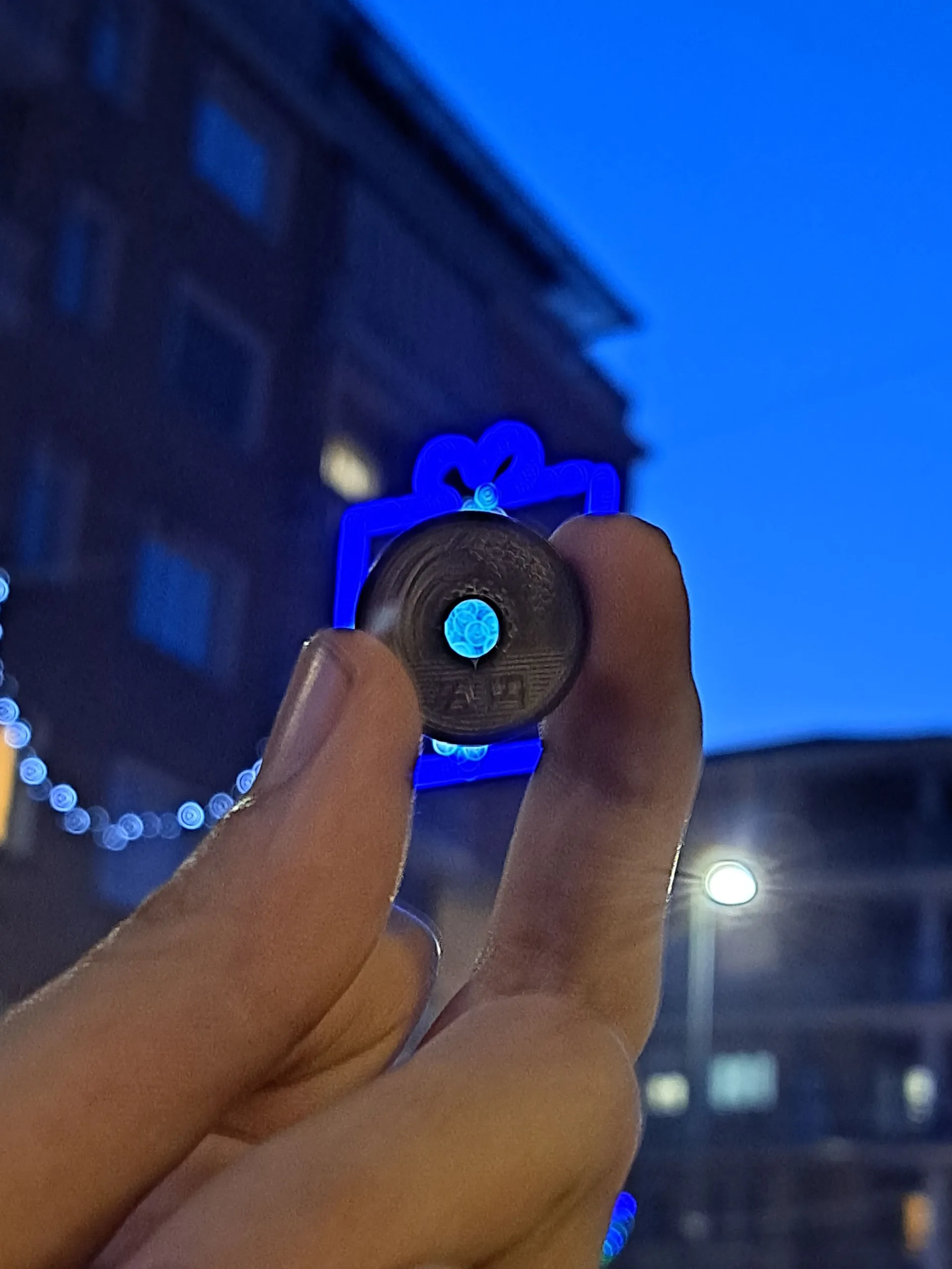
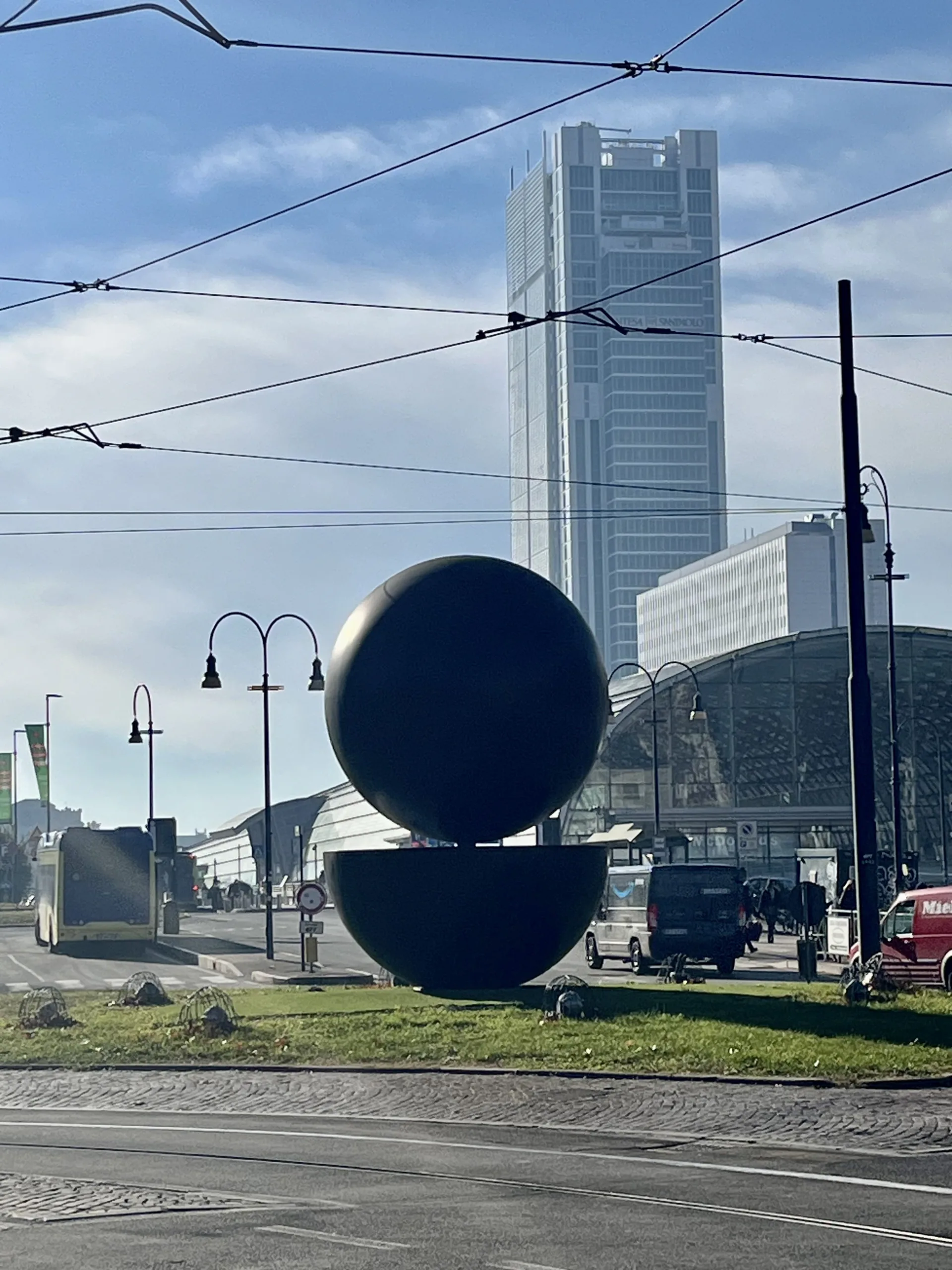
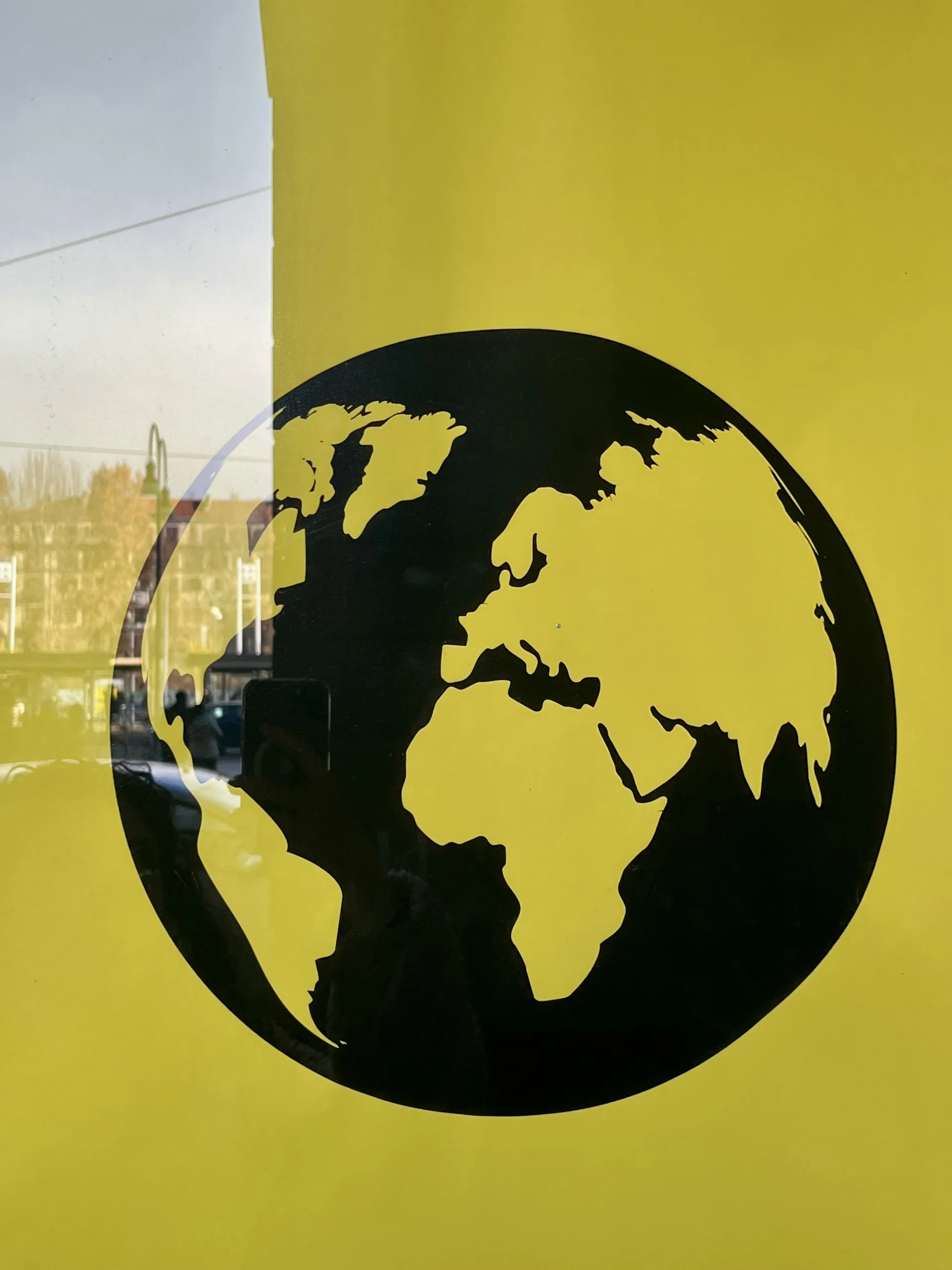
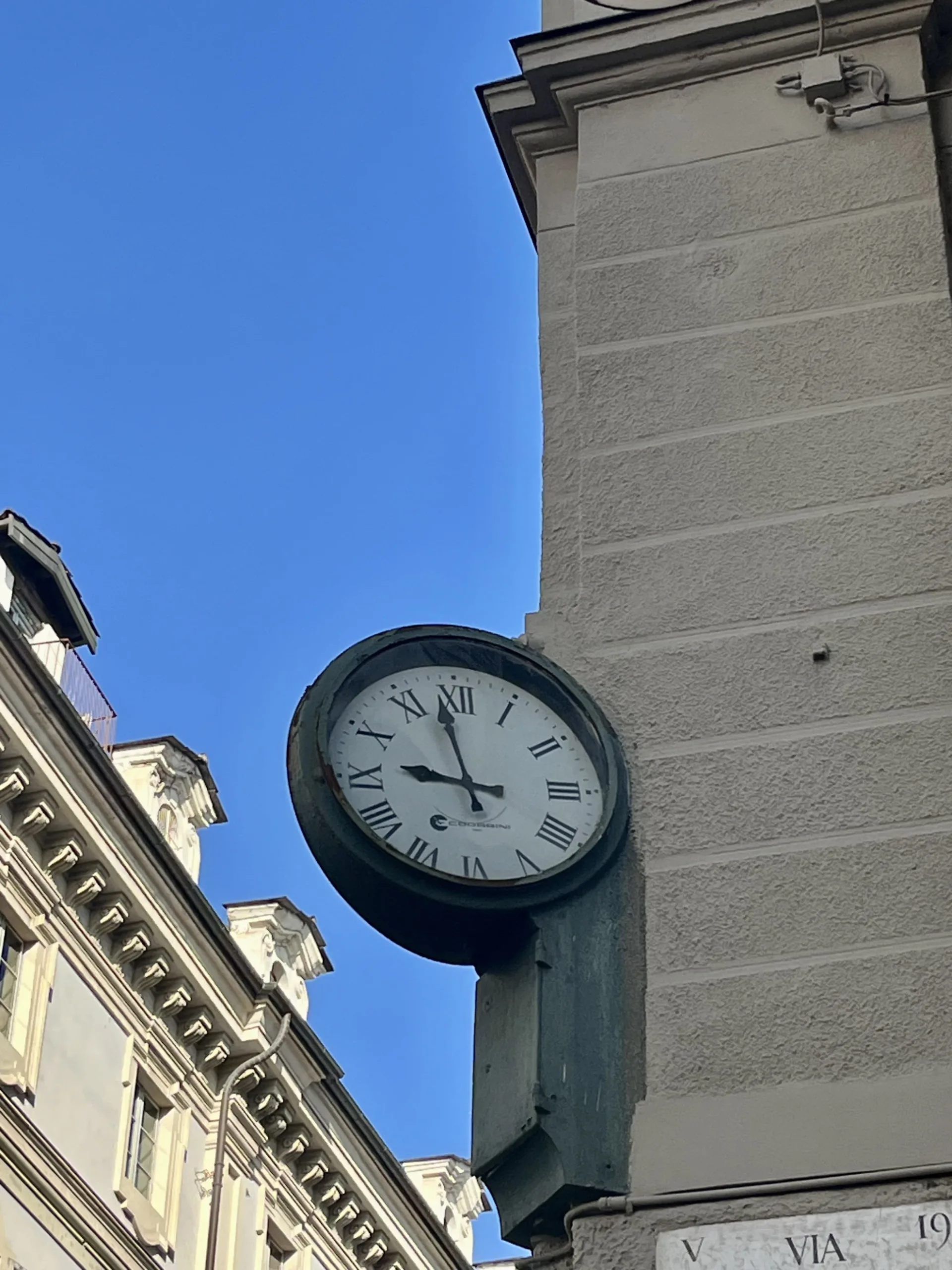
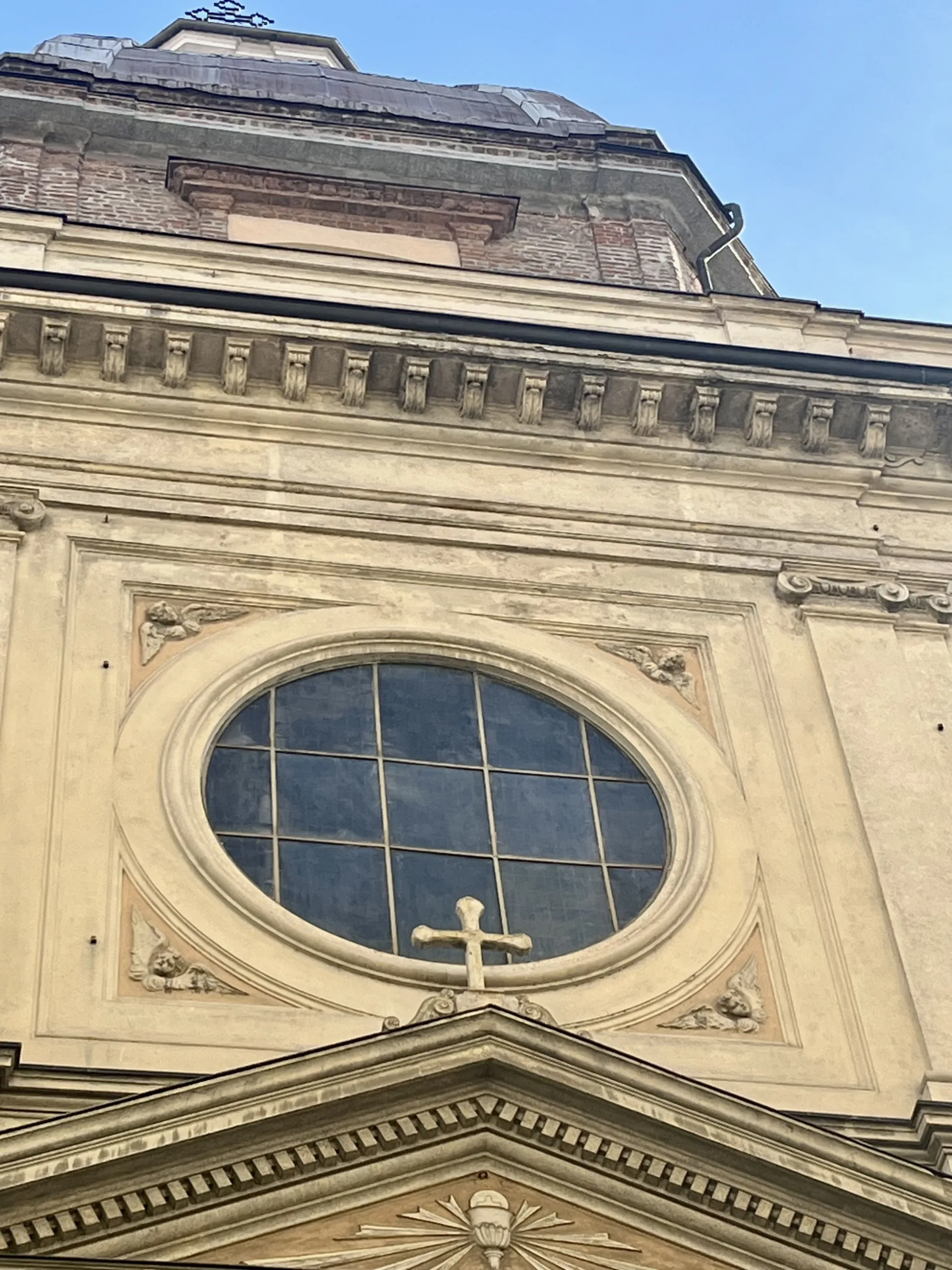
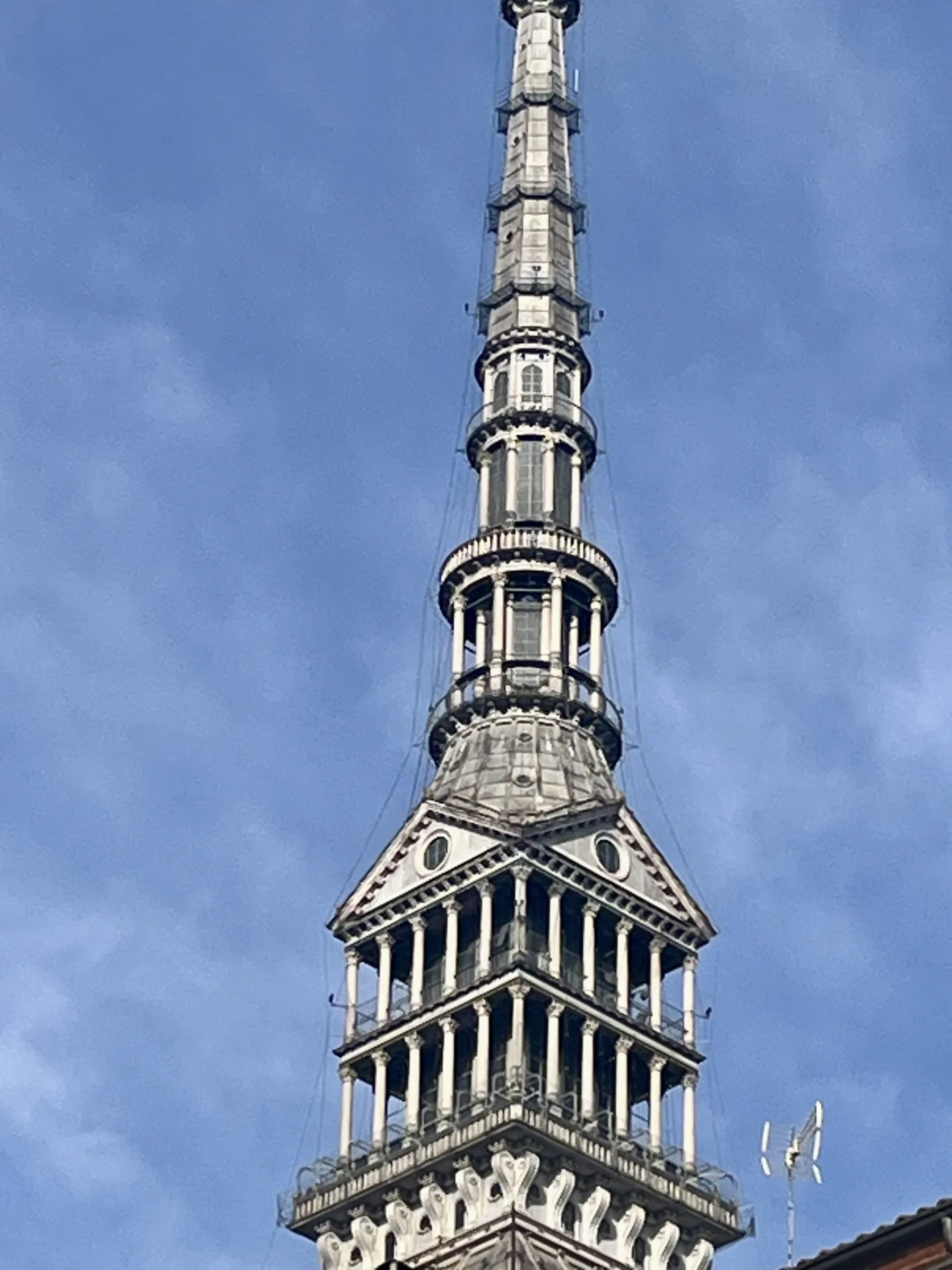
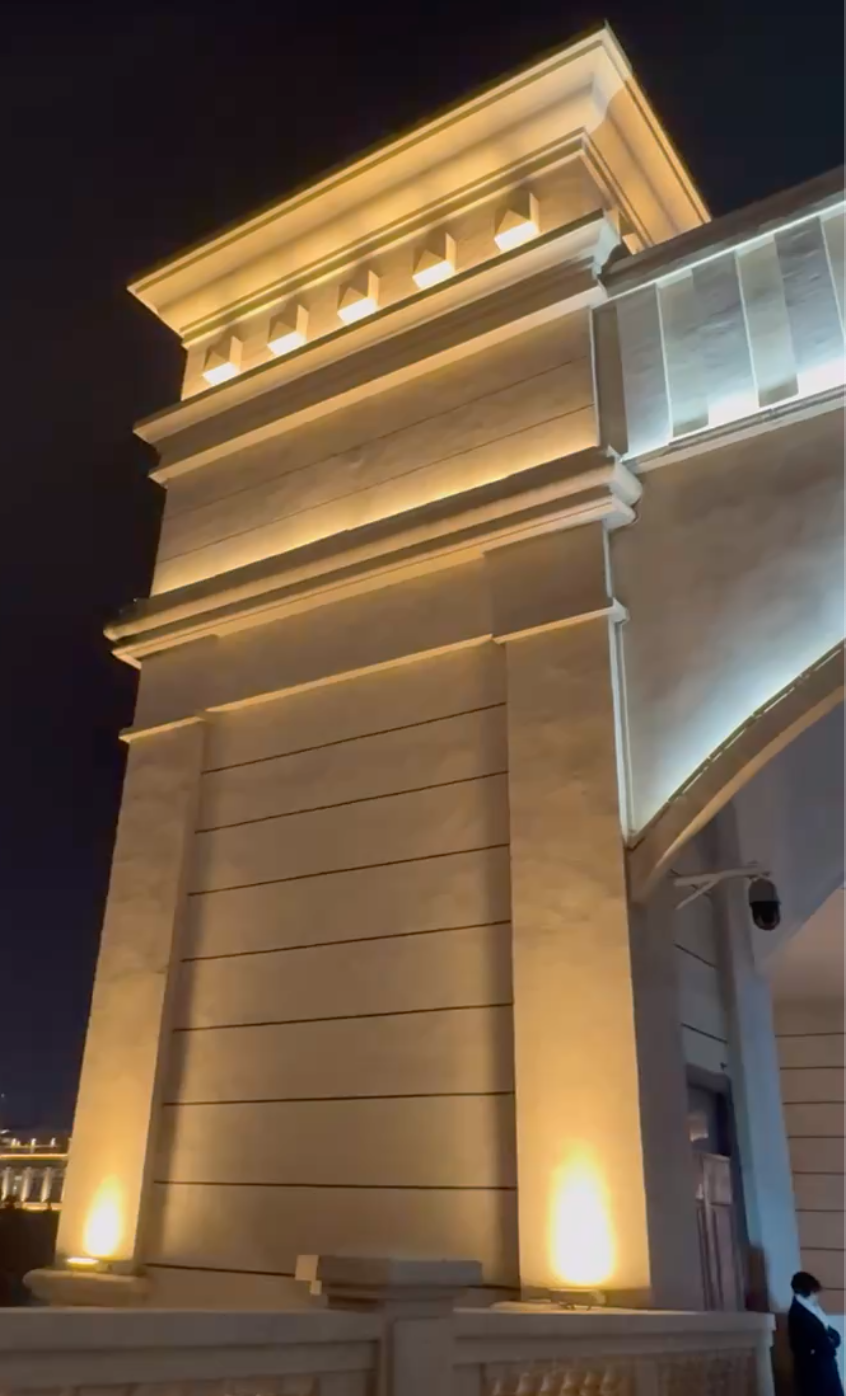
This section contains photographs taken by Chinese language students from the University of Turin during the photography workshop "Yangtze: The Mythical Mother River" conducted by Professor Yan Preston in December 2023 (see Events section). The students explored Turin's urban landscape searching for decorative motifs characterized by a circle inscribed within a square, tracing back to the Chinese concept "tianyuan difang 天圆地方" (The sky is round, the earth is square). The images are accompanied by reflections, written by the photographers themselves, on the encounter between Eastern aesthetic culture and Turin's architecture, and on the possibility of adopting new perspectives regarding Chinese presence in the city and the dialogue between cultures.
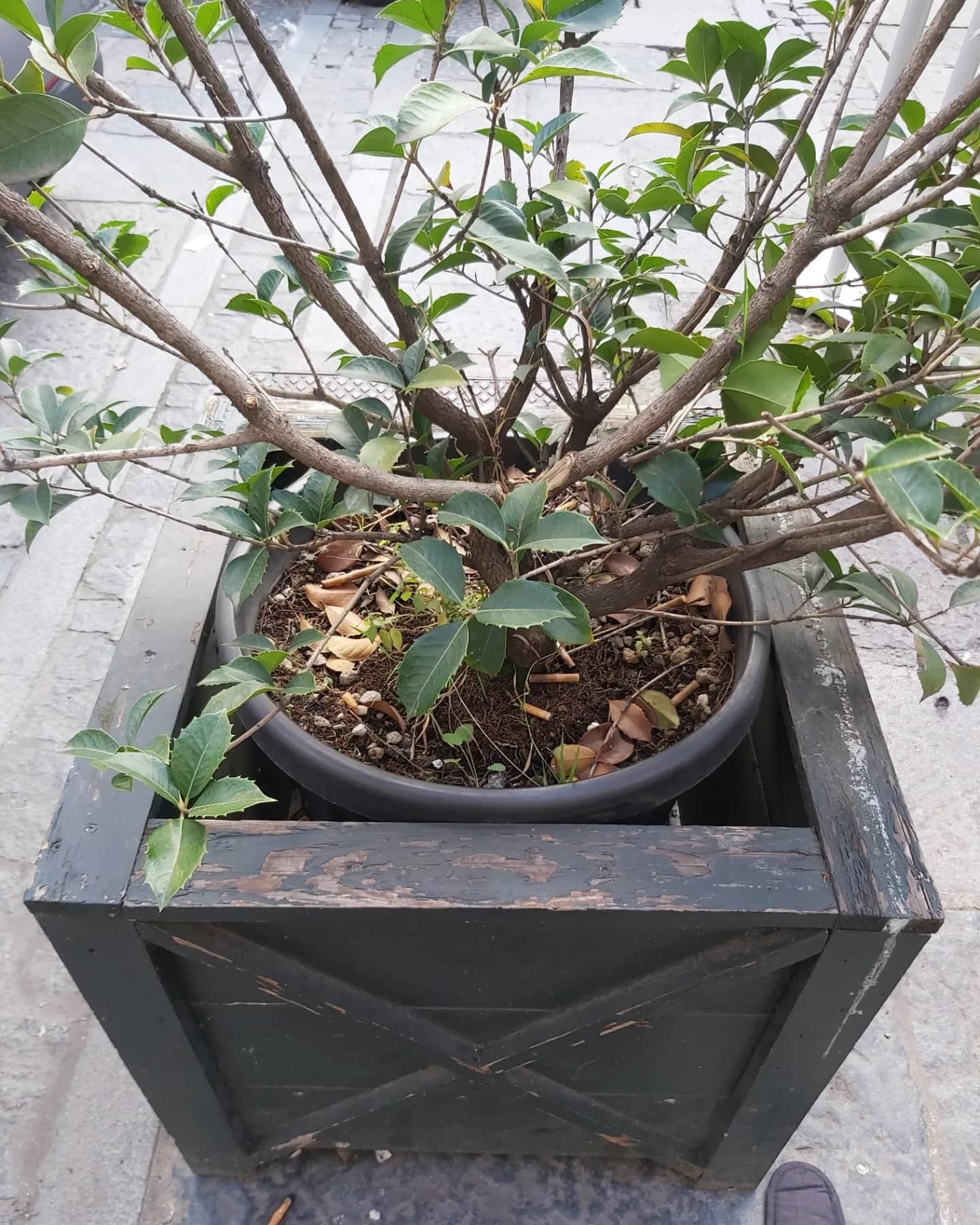
Plant vase, Arianna Minutolo

The last image conveys a similar concept, with the plant emerging from a circular vase and reaching toward the sky. In ancient Chinese tradition, it was believed that the sky was like a dome towering over a square Earth. This principle is rooted in the traditional Chinese philosophy known as Tian yuan di fang (天圆地方). According to the Yin and Yang theory, initially the universe was a chaotic entity called Taiji (太极), considered the source of all things in some interpretations of Chinese mythology. Before the earth was separated from the sky, the universe was an enormous, indiscernible mass, similar to a large egg. Later, Taiji evolved into Liang Yi (两仪, the two complementary forces), which gave rise to the separation between heaven and earth.

Originally conceived as distinct, heaven and earth now seem to merge here. The plant, symbolizing the earth, stretches its branches upward toward the sky, creating harmony between the two elements. This representation symbolizes the balance and interconnectedness of all things in the universe, reflecting the ancient belief that heaven and earth are not separate entities, but rather complementary forces operating together. The plant reaching upward signifies the aspiration to connect with the divine and attain higher spiritual realms, while the circular vase embodies unity and the integration of the physical world (earth) and the spiritual realm (sky).

02

Chinese Geography

This section contains photographs taken by Chinese language students from the University of Turin in spring 2024, following the lecture titled "China Through Chinese Eyes: A Land of Memories" delivered by Professors Stefania Stafutti and Tanina Zappone (see Events section). Students were asked to document Chinese presence throughout Turin's urban landscape through photography. The images are accompanied by reflections written by the photographers themselves, examining their personal perceptions of Chinese presence in the city and how this interacts, either explicitly or implicitly, with their daily reality. The creation of this "photographic itinerary" served as a starting point for reflection while establishing these working methods as valuable pedagogical tools for understanding and studying Chinese language and culture. Furthermore, the activity aimed to foster students' awareness of how much of the world they study exists within "their own" world; this awareness should be directed toward facilitating their interaction with communities, positioning them as agents of inter-acculturation processes. In this way, the project also becomes an exercise for improving community integration dynamics within the territory. Finally, the activity sought to encourage students to identify points of connection and/or contradiction between what they learned through traditional teaching methods or diverse sources about Chinese cultural world and what they experienced through the "visual geography" they created.
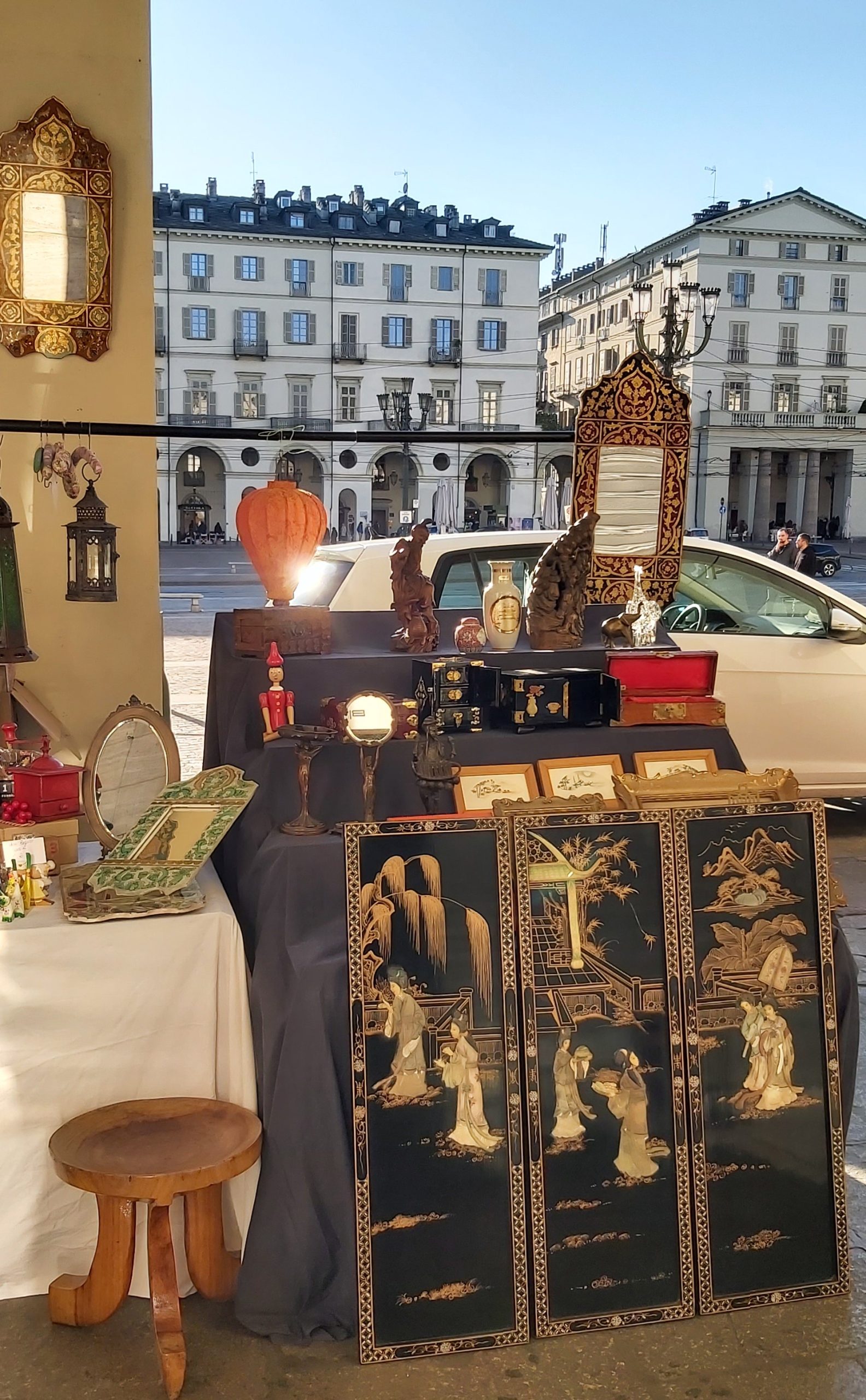
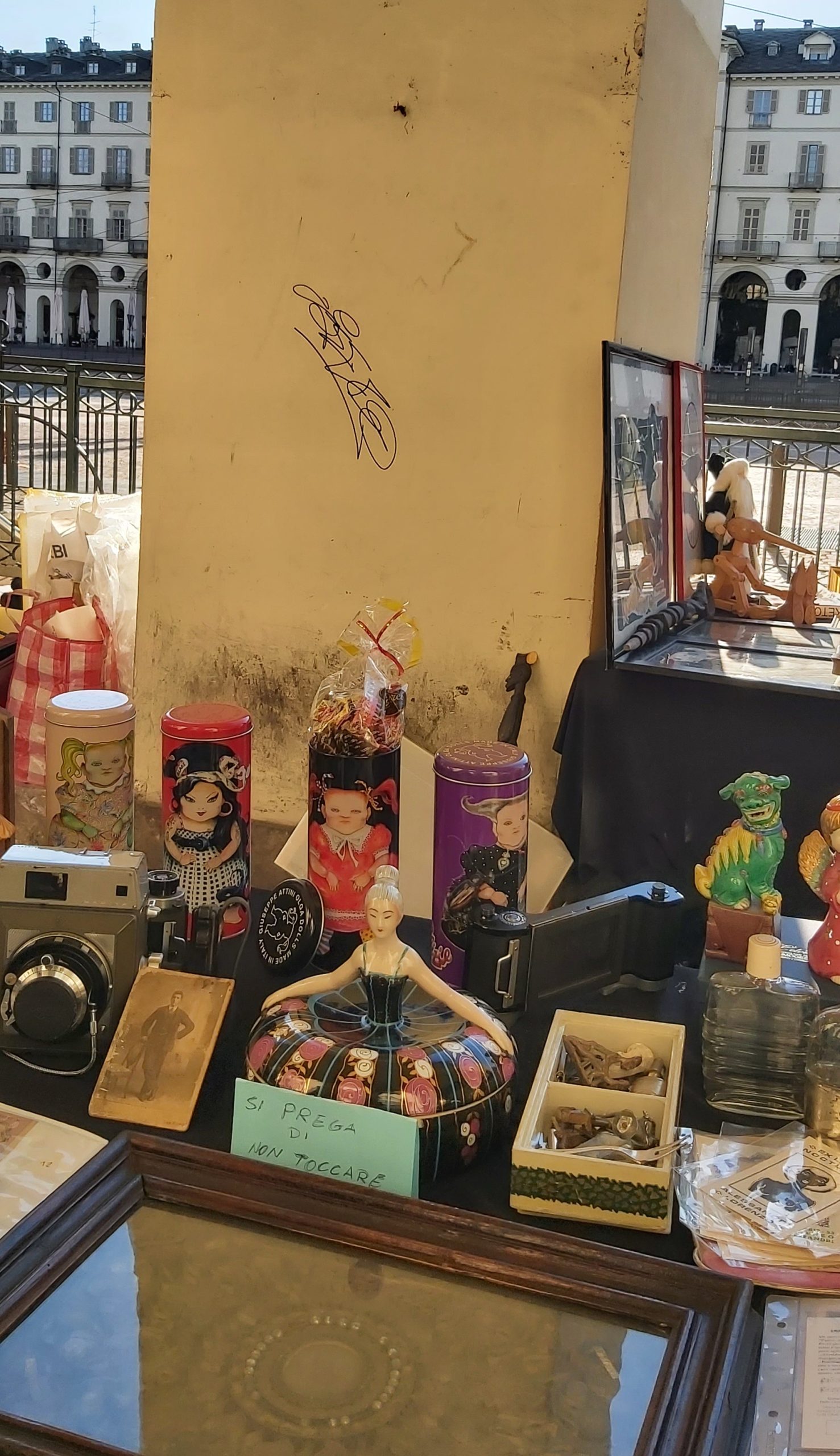
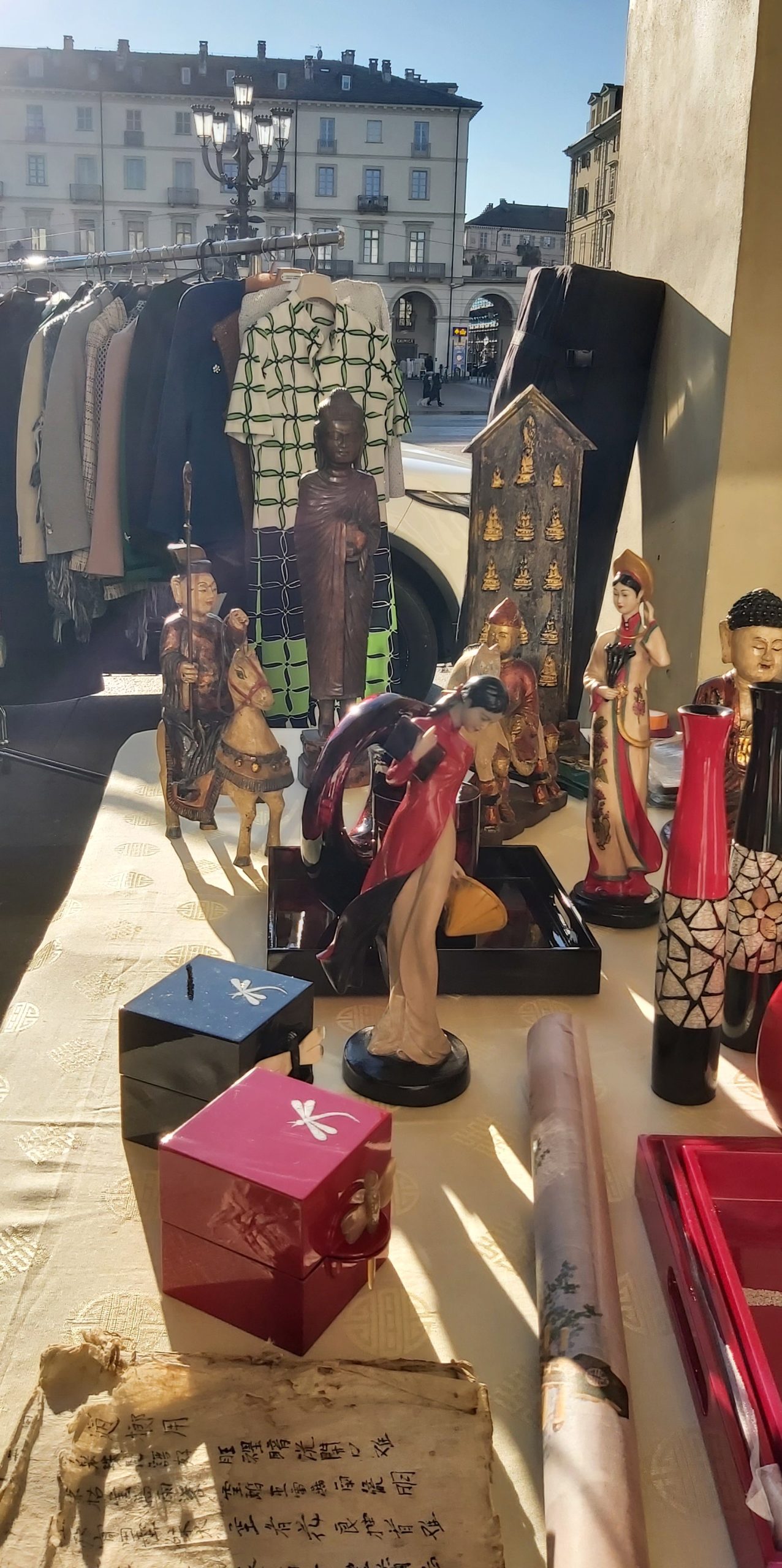
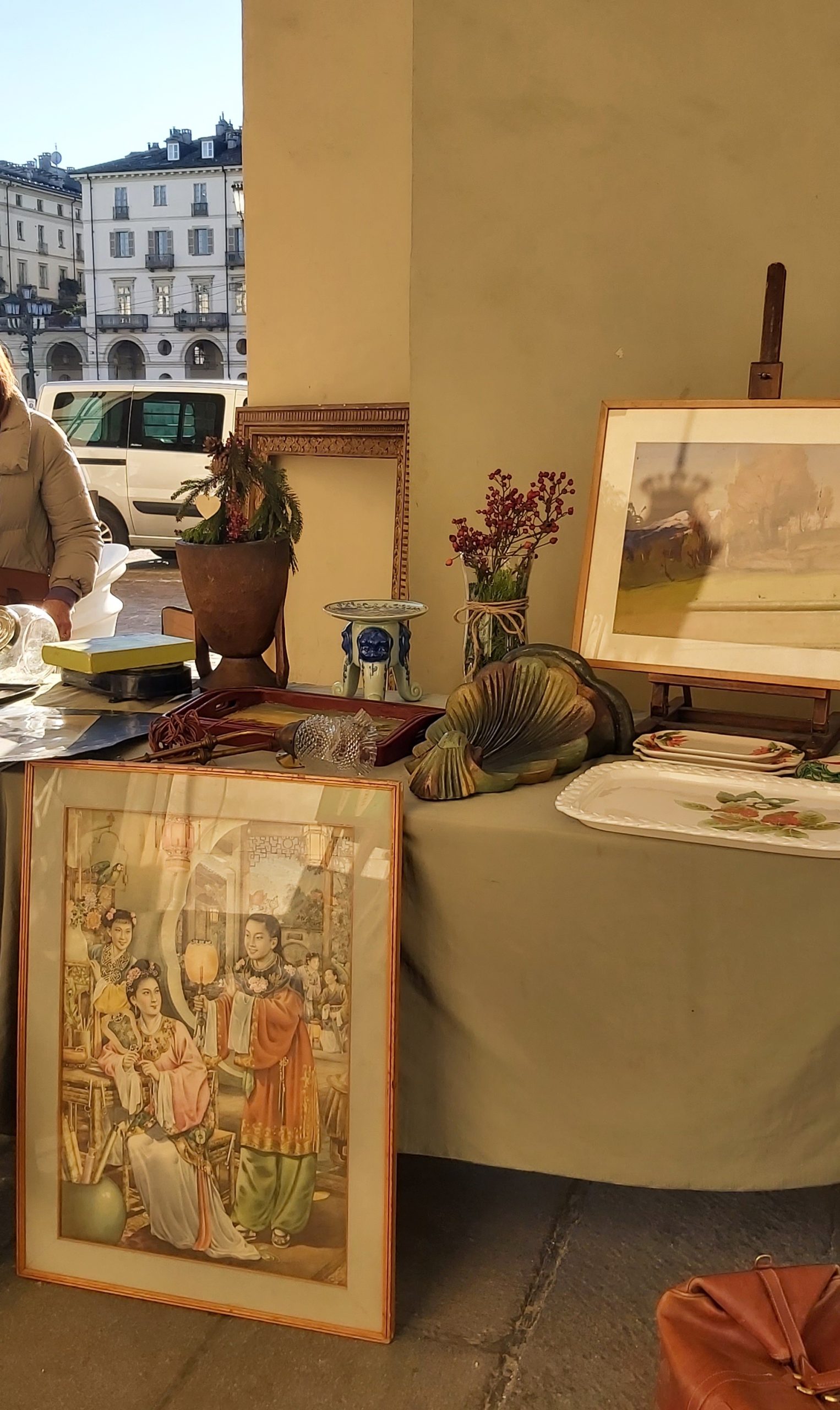
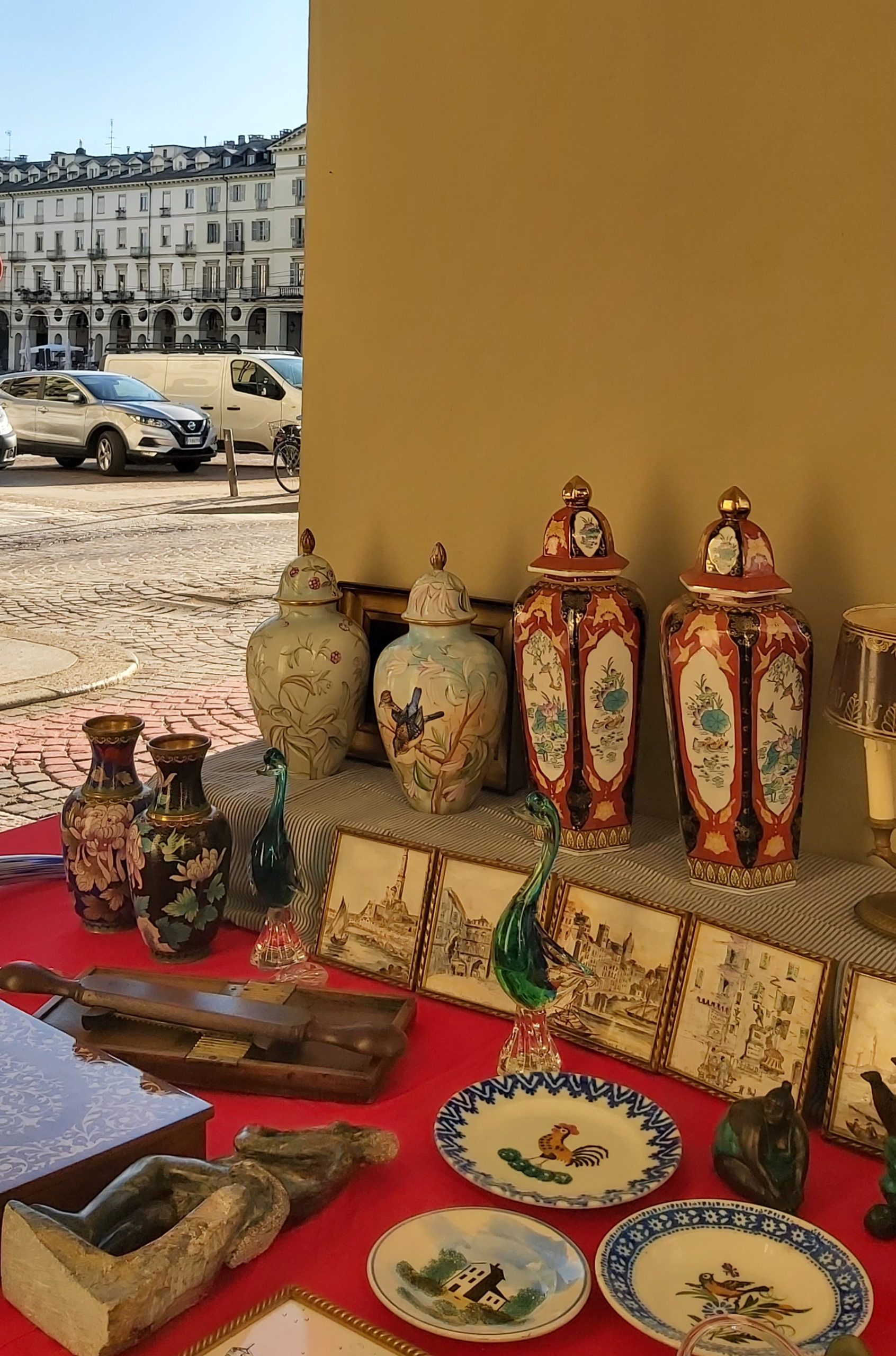
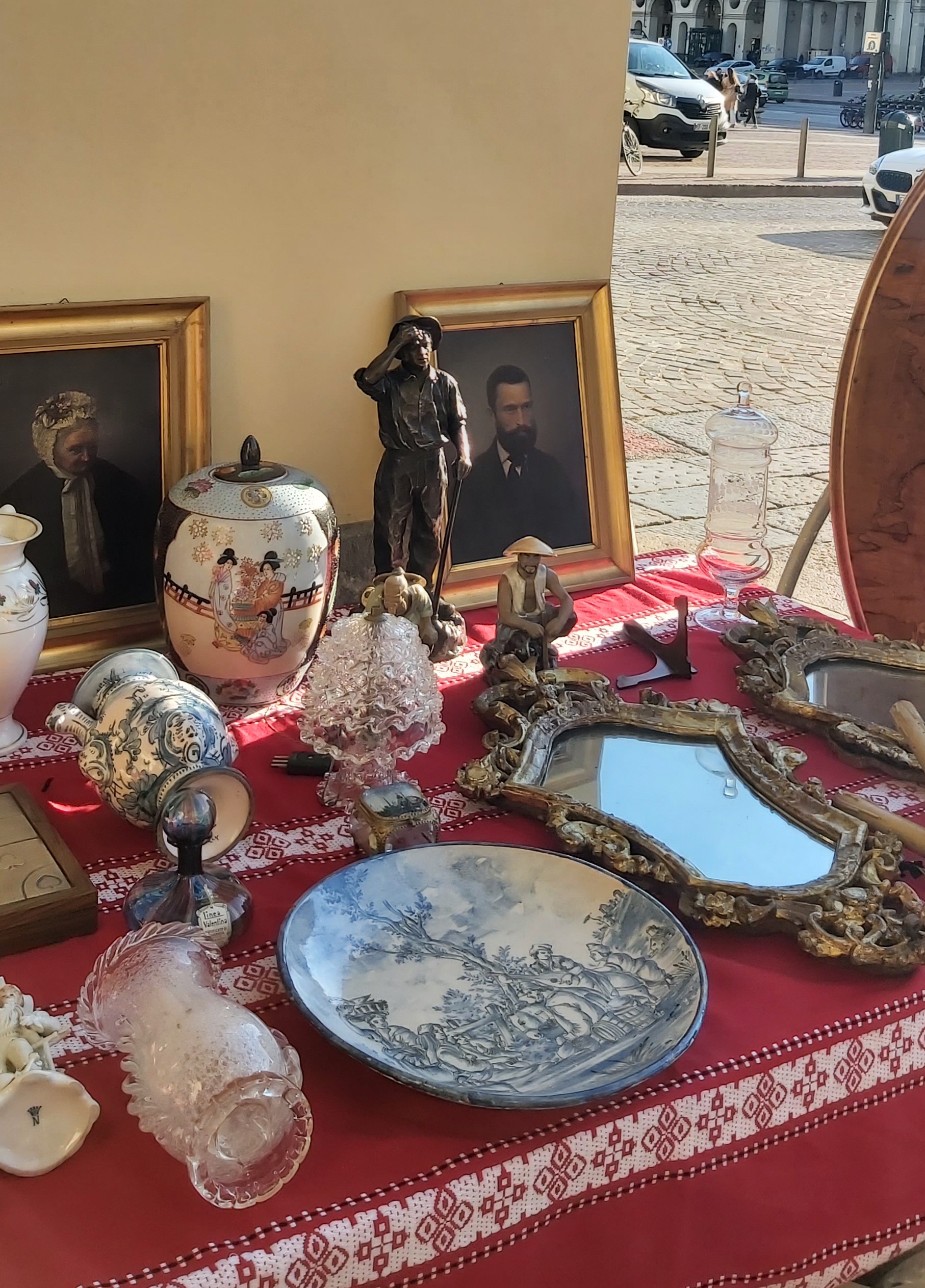
Photograph of a Chinese artifact, Piazza Vittorio Veneto, Giulia Valtieri

Chinese presence can be found everywhere, both geographically and socio-culturally. Many Italian cities, and in this specific case Turin, boast a Chinese cultural heritage made up of objects brought to Italy by Chinese migrants themselves. However, some objects and items have been and still are brought to Turin by Western collectors.

The series of photographs taken in Piazza Vittorio Veneto, one of the largest and most famous squares in the city, on December 3, 2022, exemplifies this latter trend. The photos depict an antique fair displaying various objects with clear Chinese roots or influences, illustrating how much these types of goods have been appreciated in a European city like Turin, which has a significant historical, cultural, and artistic background.

Statues with Asian features, ceramics featuring water lilies, framed paintings depicting Chinese figures, and old documents with Chinese characters are just some examples of China's presence in the arts appreciated in Italy. These images, blending with Western objects on the same stands, show how interconnected the Chinese and Italian worlds are—contrary to the belief of some that consider them completely separate.

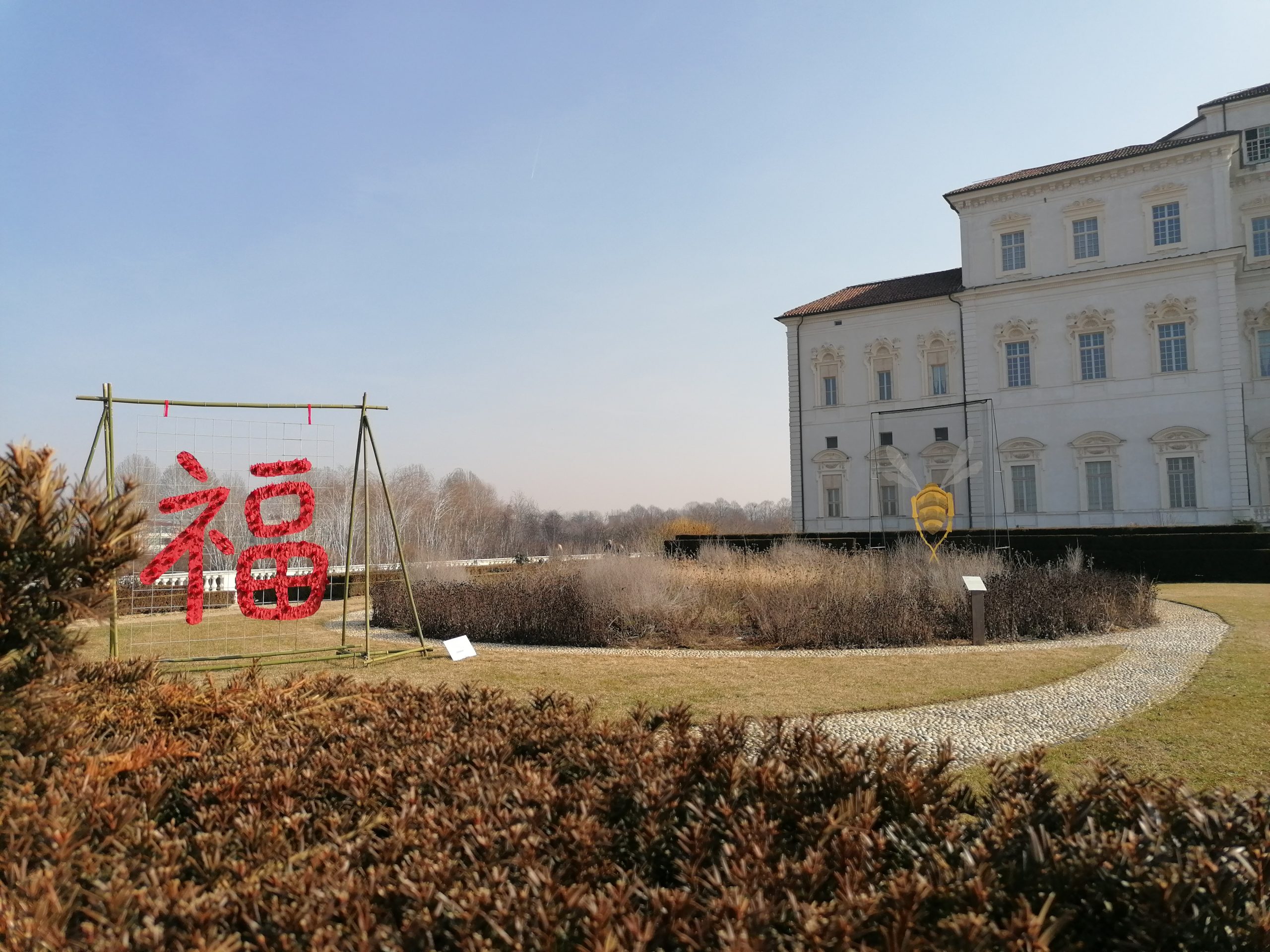
The character 福 - happiness, good fortune, Marta Rolando

During the Chinese New Year days in 2023, an installation featuring the character 福 (fú – good fortune) could be seen in the gardens of the Royal Palace of Venaria (Turin). This work was created by the landscape designers of the Palace in collaboration with the Confucius Institute of Turin and the University of Turin. It is not the only artistic installation in that location. In the photo, there is also an installation by Hilario Isola, representing a bee wandering among plants and bushes.

The installation presenting the 福 character consisted of red leaves and small flowers attached to a grid, with some green bamboo trunks surrounding it. These trunks seemed to form a sort of frame around the grid and the Chinese character, as if it were an artwork depicting leaves and flowers in harmony with the surrounding vegetation.

The connection to Chinese culture was evident because a Chinese element (the 福 character) was integrated into an Italian landscape, that of a Savoy residence.

In Chinese, 福 means "happiness, good fortune," and it is a term frequently used during Chinese New Year celebrations in many decorations and greetings.

It’s not uncommon to see this character upside down. The reason is that in Chinese, “倒福” (dàofú – “upside-down fortune”) sounds similar to “到福” (dàofú – “fortune has arrived”). The choice of red is also deliberate, as red is predominant during Chinese New Year. Even in Italy, red can be linked to the New Year; for example, wearing something red is said to bring good luck in the year to come.

Another important aspect of the installation is the color of the bamboo trunks, green. Besides creating a sense of connection between the artwork and the surrounding environment, in Chinese culture, green is a symbol of nature, lush vegetation, and youth.

The 福 artwork not only evokes decorations seen on Chinese doors during Chunjie but also reminds us of something more: a new year, or even a new day, can represent rebirth and fresh youth, as well as a good opportunity to be happy and strive to live a happy and fortunate life.

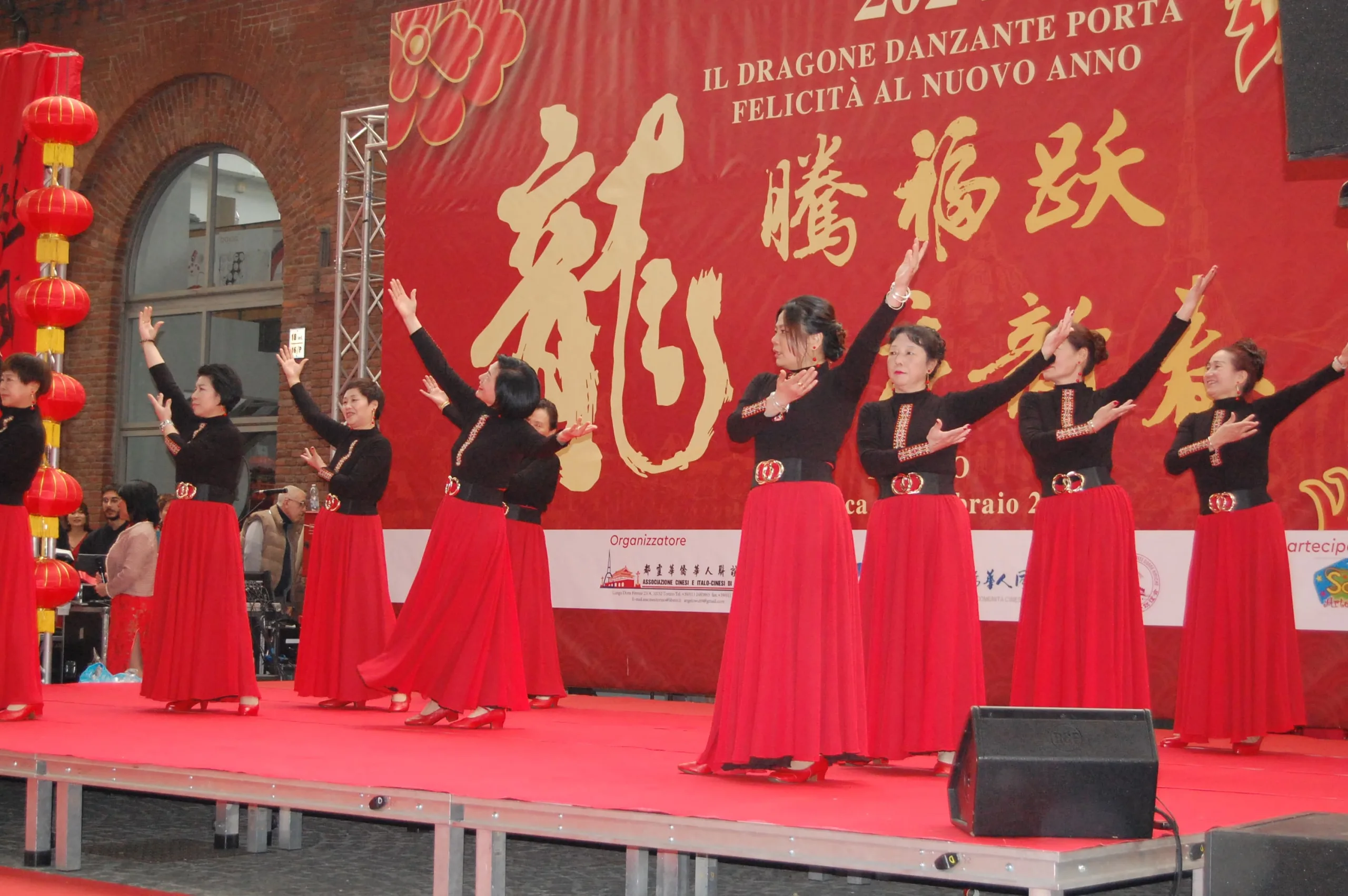
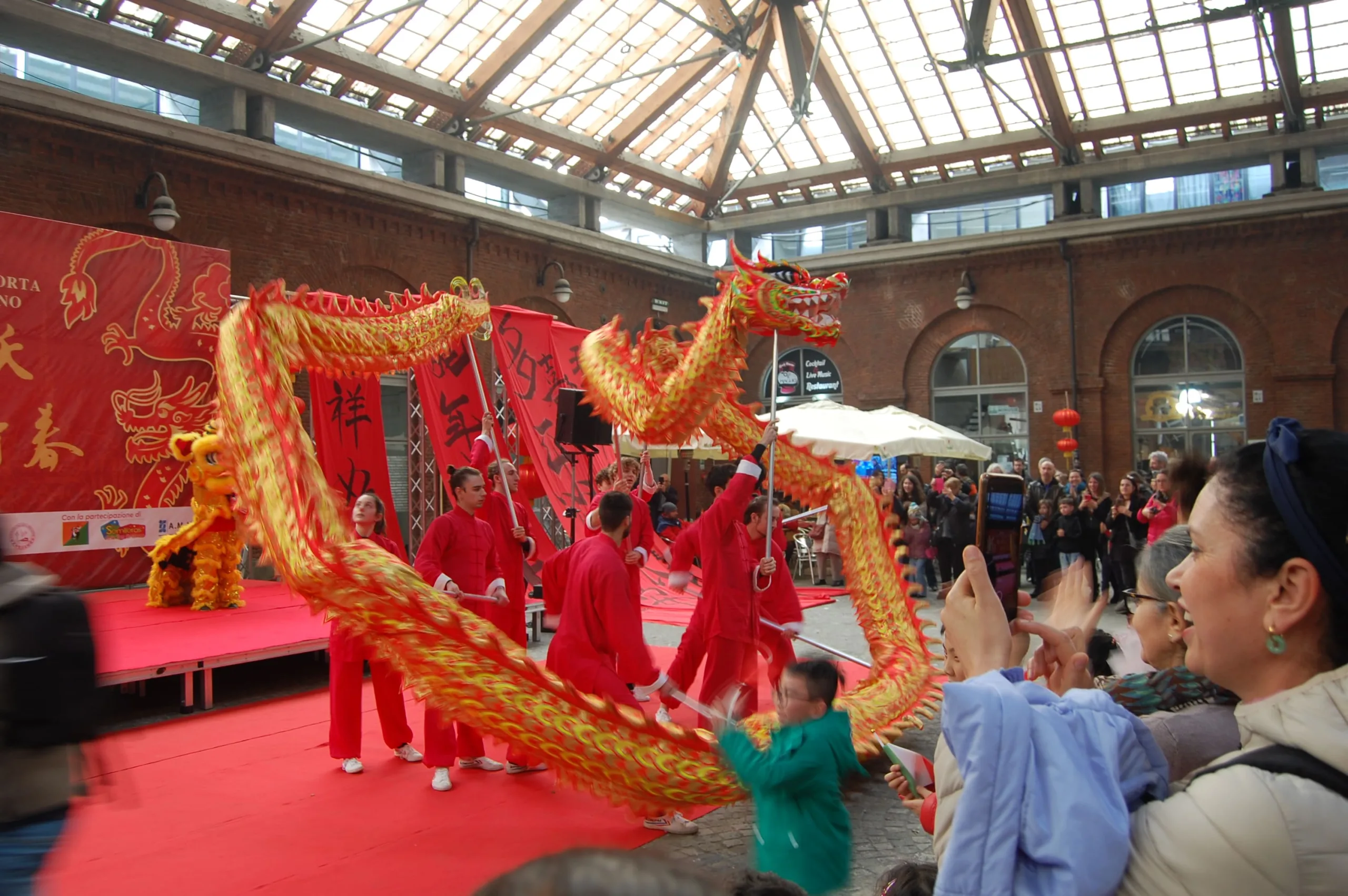
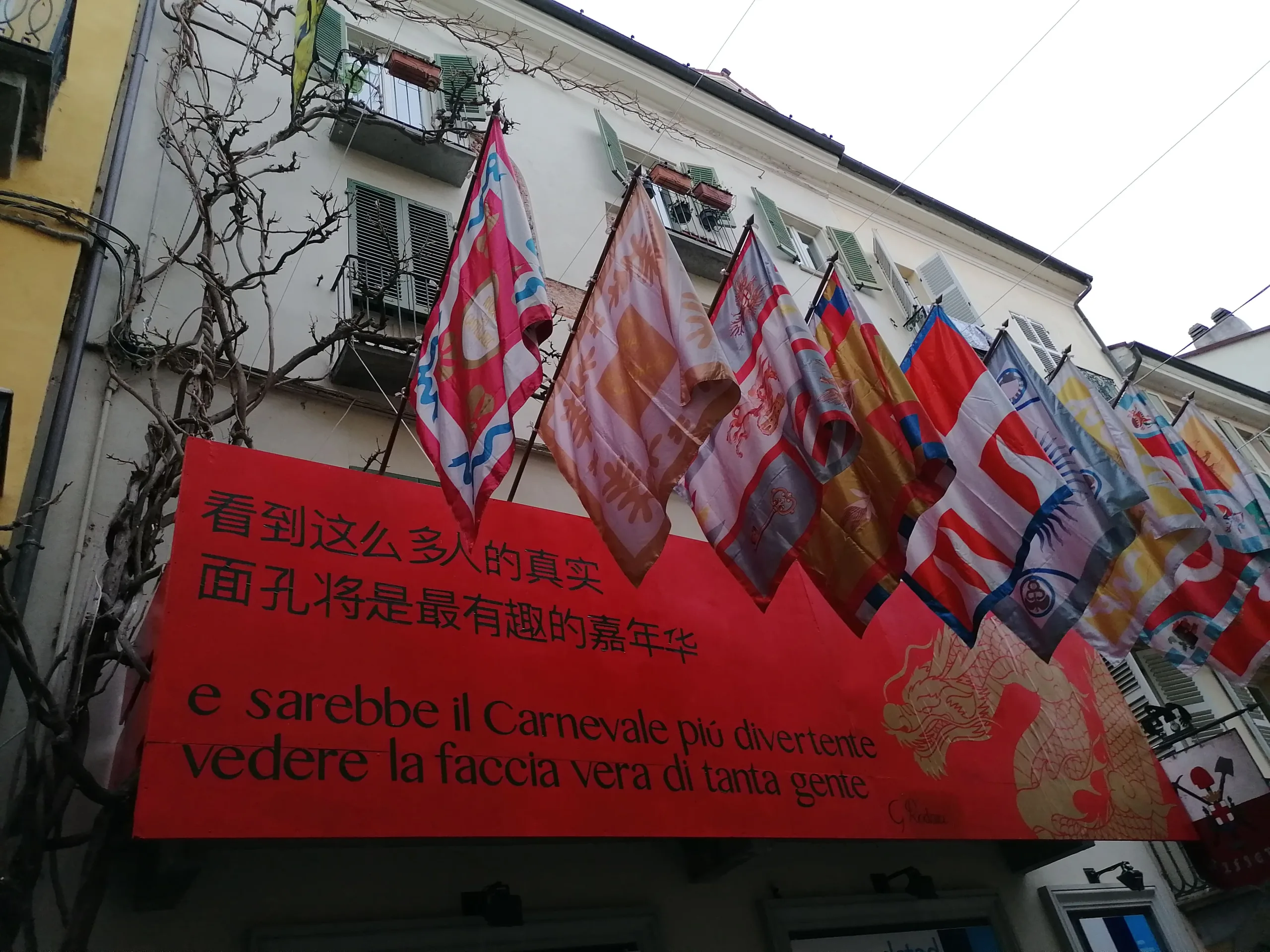
Carnival of Ivrea and Chinese New Year, Marta Rolando

"看到这么多人的真实面孔将是最有趣的嘉年节" is the translation of the last part of Gianni Rodari's poem “Scherzi di Carnevale,” where the author states that the carnival would be more fun if we could see everyone's true face ("and it would be the most fun carnival to see the real face of so many people").

The balcony decoration in the photo was created by the Alfieri group, which has been organizing the Historic Carnival of Ivrea since the second half of the 1990s. The theme chosen by the association to celebrate the 2024 edition of the Carnival was the Chinese Year of the Dragon.

One possible reason for this choice could be the desire to symbolize the strength and courage that are characteristic of both the dragon and the people participating in the Ivrea Carnival, a rather unique event.

Another point in common between the Ivrea Carnival and the Chinese New Year is that both are significant occasions. The local Carnival is meaningful to the people of Ivrea, perhaps somewhat similarly to how the Chinese Chunjie — Spring Festival — is a key moment for Chinese communities.

It’s interesting to note that in 2024, these two events will happen almost simultaneously.

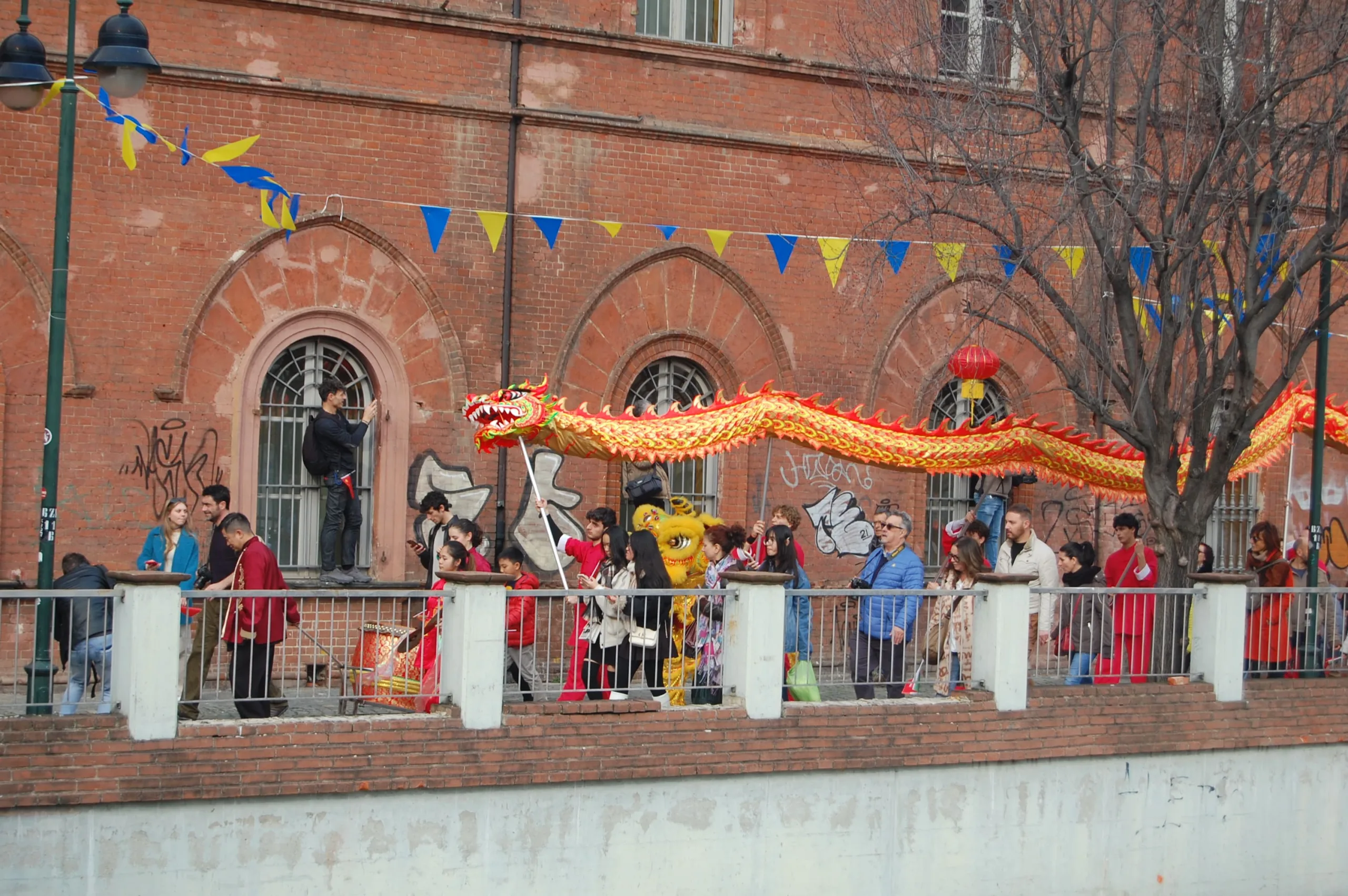
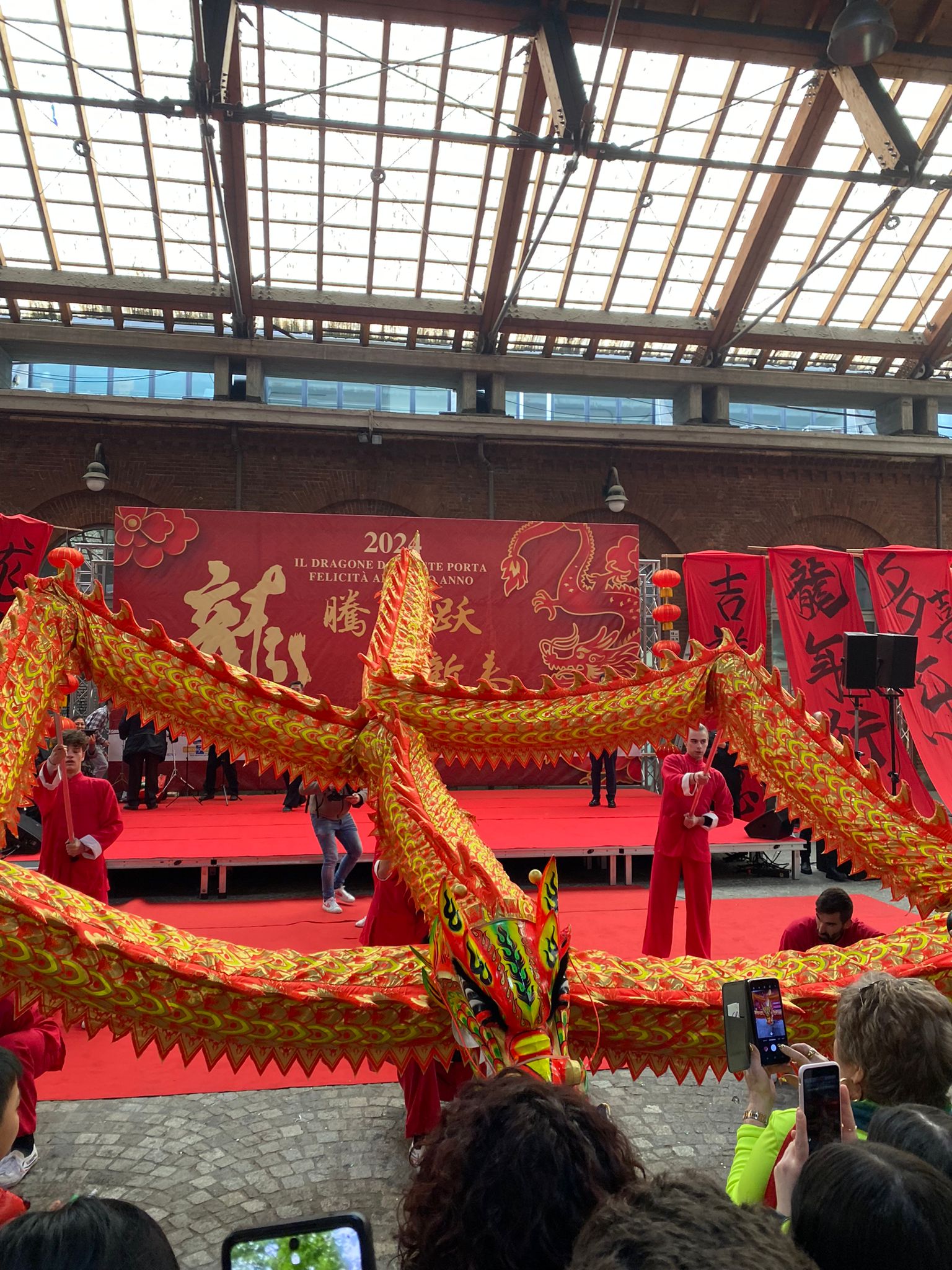
The reference to Chinese culture is clear here because it uses one of its symbols, the dragon (which in ancient imperial China represented the Emperor).

It is said that the Year of the Dragon is a period of luck and power, especially for those born in that year.

The connection with Chinese culture can be seen in the colors: red and gold. Red is frequently used to represent happiness, luck, and energy, and is probably the main color for decorations in homes during Chinese New Year celebrations. Gold often pairs with red for this occasion.

In this photo, we can see different cultures conveying a message that appears to be the same: I wish you happiness, luck, strength, safety, and courage every day of your life.

03

Geography of Memory

This section contains two interviews and a questionnaire conducted in collaboration with students from the University of Turin and members of Turin's Chinese community. The initiative aimed to guide students in comparing their personal perceptions of China with the "memories" preserved within the local community. The first interview, conducted by Gioia Wang and accompanied by two original videos, features her mother and explores the dual sentiments of pride and nostalgia experienced by a member of Turin's Chinese community. The second interview, conducted by Arianna Minutolo, takes the form of a peer exchange: an open dialogue between Arianna (an Italian student with study experience in China) and her friend Cora (a Chinese student residing in Turin). The interview compares their respective opinions and impressions about living abroad.